

Your business news from the world
Provided by AGP
MDC Releases North Carolina Policy Roadmap to Address Student Loan Debt
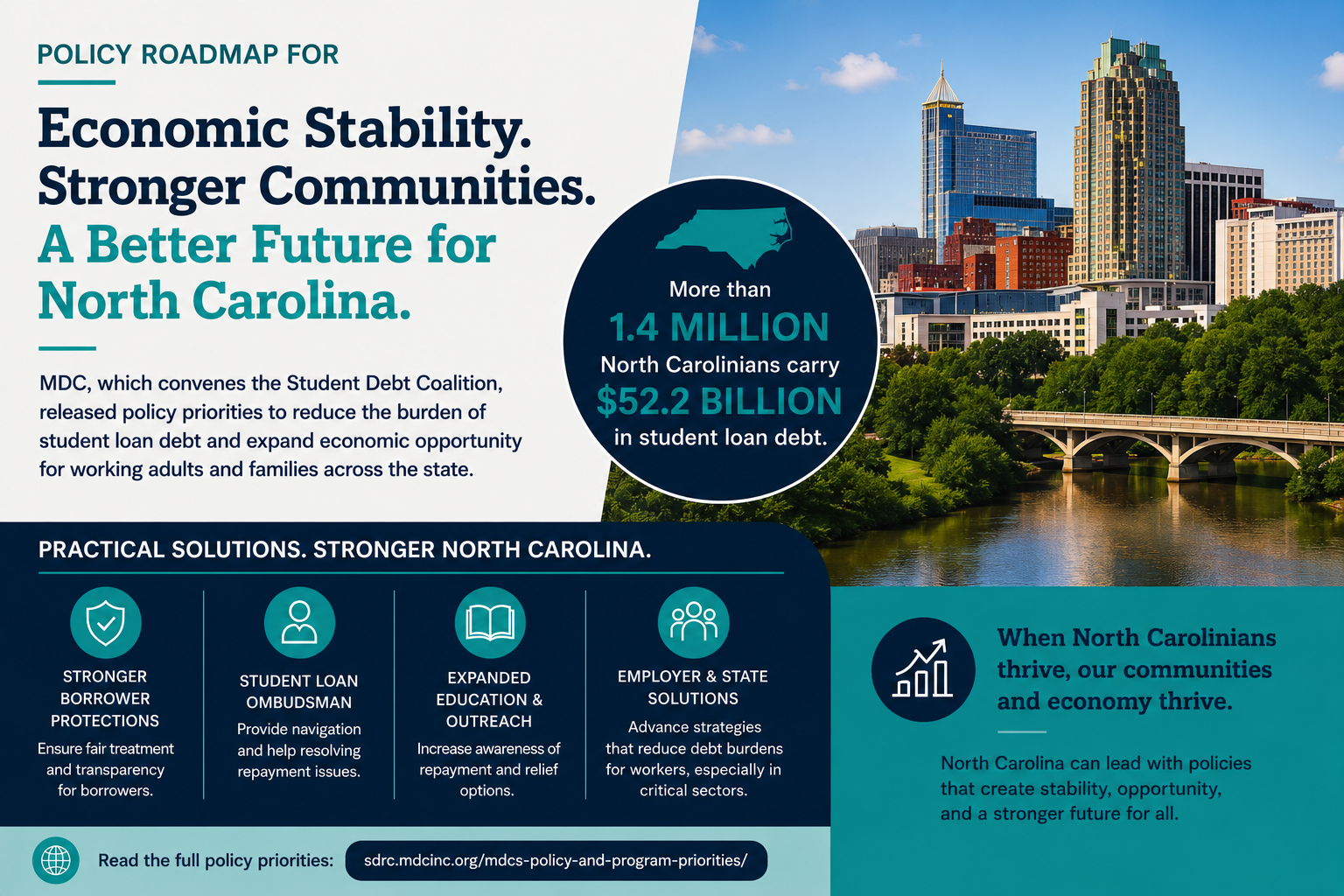
MDC released a new policy roadmap outlining practical state-level solutions to reduce student loan debt burdens and expand economic opportunity for working adults and families across North Carolina. The priorities focus on borrower protections, repayment
New priorities outline practical state-level solutions to reduce student loan debt and strengthen economic mobility in North Carolina.
Student loan debt is not just an individual burden—it is a systemic barrier to economic mobility in North Carolina.”
— Jenna Bryant, Senior Program Director, MDC
DURHAM, NC, UNITED STATES, May 21, 2026 /EINPresswire.com/ -- MDC, which convenes the Student Debt Coalition, today released a set of policy priorities aimed at reducing the burden of student loan debt and strengthening economic security and mobility for working adults and families across the state.
More than 1.4 million North Carolinians carry a combined $52.2 billion in student loan debt. For many families, this is not just another bill. It is a monthly burden that competes with rent, child care, groceries, medical costs, transportation, and the ability to save for an emergency.
Student loan debt also delays the steps that help families build stability, such as buying a first home, repairing credit, starting a small business, or putting money aside for their children’s future. When families are forced to delay those choices, the effects ripple outward, shaping local economies, workforce decisions, and the long-term strength of communities across North Carolina.
“Student loan debt is not just an individual burden—it is a systemic barrier to economic mobility in North Carolina,” said Jenna Bryant of MDC. “When people are doing everything they can to work, care for their families, and build a stable future, they should not be held back by confusing systems, limited protections, or debt that keeps them from getting ahead.”
The priorities focus on practical, state-level solutions that can reduce financial pressure on borrowers while strengthening North Carolina’s workforce and economy. They call for action to strengthen borrower protections, create a student loan ombudsman to help borrowers navigate repayment and resolve issues, expand education and outreach on repayment and relief options, and advance state and employer-based strategies that reduce student debt burdens for workers, especially in critical sectors.
“Employers are central to this conversation,” said Sabrina McGee of MDC. “They are feeling the impact of educational debt in recruitment and retention, and they have a role to play in advancing solutions.”
The coalition emphasizes that North Carolina can act now with state-level policies to create stability, improve transparency, and protect borrowers. These solutions would not only support individual borrowers but also strengthen workplaces, local economies, and communities across the state.
“North Carolina has an opportunity to lead,” Bryant said. “By investing in borrower protections, navigation, and practical relief strategies, the state can help more residents move from financial pressure toward stability, opportunity, and a stronger future.”
Read the full policy priorities.
About SDRC: The Student Debt Relief Coalition convenes individuals and organizations interested in student loan debt-related issues to inform student debt holders and work toward more borrower-friendly policies and programs.
About MDC: MDC equips Southern leaders, institutions, and communities with tools and strategies to advance equity and economic mobility.
Clarissa Goodlett
MDC
cgoodlett@mdcinc.org
Visit us on social media:
LinkedIn
Instagram
Facebook
Legal Disclaimer:
EIN Presswire provides this news content "as is" without warranty of any kind. We do not accept any responsibility or liability for the accuracy, content, images, videos, licenses, completeness, legality, or reliability of the information contained in this article. If you have any complaints or copyright issues related to this article, kindly contact the author above.
