

Top Oil-Immersed Transformer Manufacturer Shandong Xunchi Electric Advances Power Distribution Solutions
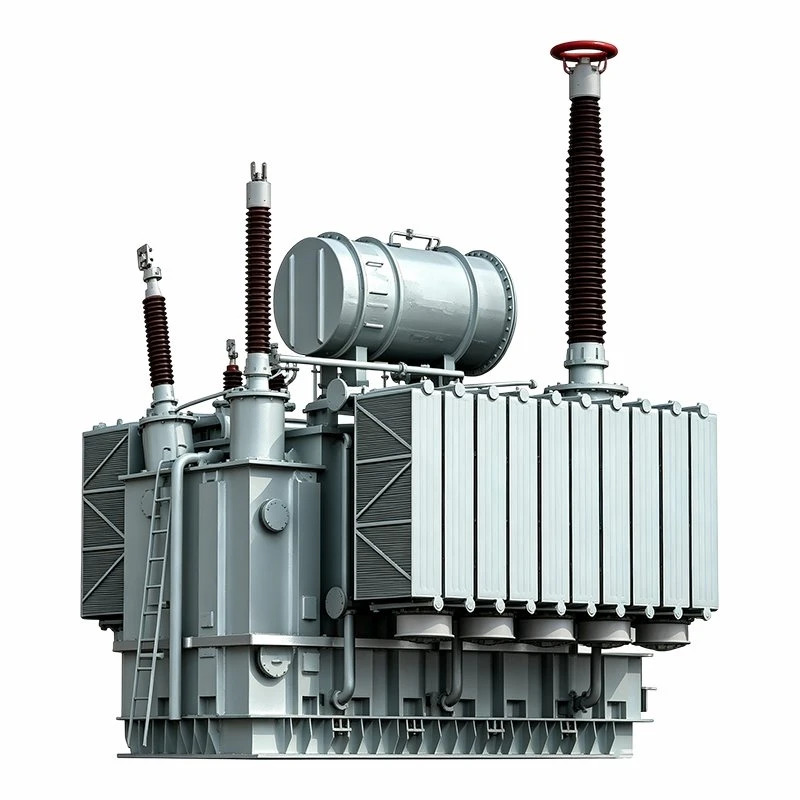
Oil Immersed Power Transformer
HEZE, SHANDONG, CHINA, October 16, 2026 /EINPresswire.com/ --
Shandong Xunchi Electric Co., Ltd. is strengthening its presence in the power transmission and distribution equipment sector as electricity networks, industrial facilities, and renewable energy projects continue to require dependable voltage transformation solutions. Based in Chengwu County, Heze City, Shandong Province, China, the company focuses on the production of power transmission and transformation equipment. Its product portfolio includes oil-immersed transformers, dry-type transformers, combination transformers, prefabricated substations, and related electrical equipment. As buyers increasingly consider efficiency, operational reliability, and project-specific requirements, manufacturers such as Shandong Xunchi Electric Co., Ltd. are positioned to serve a range of power infrastructure needs.
Transformers are essential components of modern electrical systems. They adjust voltage levels to support the transmission and distribution of electricity between generating facilities, substations, industrial users, commercial buildings, and local distribution networks. Choosing the appropriate transformer requires consideration of voltage, rated capacity, load characteristics, installation environment, cooling method, insulation, and maintenance requirements.
Oil-immersed transformers remain widely used in power distribution and transmission because their insulating oil provides both electrical insulation and heat transfer. Depending on the design, they can support applications ranging from local distribution networks to high-voltage substations. At the same time, dry-type transformers and combination transformers offer alternative configurations for projects with different installation conditions and distribution requirements.
Shandong Xunchi Electric Co., Ltd. lists oil-immersed transformers as a core product category and also provides Dry-Type Transformer and Combination Transformer solutions. Its wider product portfolio includes prefabricated substations, high-voltage switchgear, low-voltage switchgear, power distribution cabinets, and other electrical equipment. This combination of product categories gives project developers and procurement teams several options to consider when planning power infrastructure.
Oil-Immersed Transformers for Power Transmission and Distribution
Oil-immersed transformers are designed to transfer electrical energy between circuits through electromagnetic induction. Their windings and core are housed within a tank containing insulating liquid, which supports insulation and helps dissipate the heat generated during operation. The overall design depends on the required voltage level, rated capacity, cooling arrangement, operating conditions, and applicable technical standards.
These transformers are used in a variety of settings, including utility substations, industrial facilities, commercial infrastructure, and distribution networks. Larger power transformers can support high-voltage transmission systems, while distribution models are commonly used to supply electricity at voltage levels suitable for local consumption.
Shandong Xunchi Electric Co., Ltd. lists oil-immersed transformer models across several voltage categories on its official website, including 10 kV distribution transformers, 20 kV–35 kV models, 110 kV–138 kV equipment, 220 kV–275 kV models, 330 kV–400 kV models, and 500 kV oil-immersed transformers. The company also lists single-phase oil-immersed transformers and various distribution configurations.
The availability of different voltage categories is relevant because transformer selection must reflect the electrical system in which the equipment will operate. A distribution transformer serving a local network has different design requirements from a large transformer installed at a transmission substation. Matching the equipment to the project’s voltage, capacity, and operating profile is therefore an essential part of procurement.
Several technical parameters deserve particular attention when evaluating oil-immersed transformers. Rated capacity determines the electrical load the transformer is designed to handle under specified conditions. Voltage ratings must correspond to the connected system, while impedance affects fault current and voltage regulation. Cooling arrangements influence heat dissipation, and insulation design contributes to electrical performance.
Energy efficiency is another important consideration. Transformer losses occur even when equipment is energized but lightly loaded, while additional losses arise as the electrical load increases. Over the expected service life, these losses can contribute to operating costs. Procurement teams may therefore compare guaranteed no-load and load losses, purchase price, expected loading, and applicable efficiency requirements rather than evaluating equipment solely by its initial cost.
Oil management and maintenance also influence long-term performance. Depending on the transformer design, inspection programs may include checking oil levels, seals, bushings, temperature indicators, protective devices, and other accessories. Appropriate maintenance schedules help operators identify developing issues and maintain safe operating conditions.
Dry-Type Transformer Solutions for Indoor and Specialized Installations
Dry-type transformers provide an alternative to oil-immersed equipment by using solid insulation and air-based cooling rather than insulating oil as the primary cooling medium. They are often considered for buildings, commercial facilities, industrial installations, and other locations where the installation environment affects transformer selection.
Shandong Xunchi Electric Co., Ltd. includes Dry-Type Transformer among its principal product categories. Its published range includes 10 kV dry-type distribution transformers, 20 kV–35 kV dry-type distribution transformers, and 20 kV–35 kV dry-type power transformers.
Dry-type designs can be suitable for indoor electrical rooms and locations where limiting the presence of insulating liquid is an important consideration. However, their suitability still depends on the specific product design, ventilation, enclosure, fire-safety provisions, environmental conditions, and project standards. The installation must provide adequate space and airflow to manage heat during operation.
Different dry-type transformer designs use different insulation systems. Cast-resin models, for example, use resin insulation around the windings, while other designs may use different insulating materials and construction methods. Buyers should confirm the exact insulation technology, temperature class, cooling method, protection rating, and environmental suitability of the selected unit.
For commercial buildings, hospitals, public facilities, industrial plants, and infrastructure projects, the transformer’s physical footprint and installation requirements can influence equipment-room planning. Engineers must consider access for installation and future maintenance, clearances, cable connections, ventilation, noise, and the requirements of adjacent electrical equipment.
Dry-type transformers also require careful evaluation of losses and thermal performance. Their operating temperature depends on loading, ambient conditions, cooling, and construction. Specifying a transformer that matches the actual load profile can help avoid unnecessary energy consumption or operation beyond its intended thermal limits.
Shandong Xunchi Electric Co., Ltd.'s inclusion of dry-type equipment alongside oil-immersed models allows buyers to compare different transformer approaches within the company's wider product range. The final choice should be made according to the project's technical specifications, applicable regulations, installation environment, and lifecycle requirements.
Combination Transformer Products for Integrated Distribution
Combination transformers offer another approach to electrical distribution, particularly where a compact or integrated configuration is required. Depending on the product design and regional terminology, a combination transformer may integrate a transformer with associated high-voltage and low-voltage components within a coordinated enclosure or packaged arrangement.
Shandong Xunchi Electric Co., Ltd. lists Combination Transformer as a dedicated product category. Its website identifies three-phase pad-mounted transformers and single-phase pole-mounted transformers within this category. The company also lists prefabricated substations and photovoltaic combination transformers as separate product groups.
These configurations can support different distribution environments. Pad-mounted equipment is generally installed at ground level on a prepared foundation and may be used in selected commercial, industrial, residential, and utility distribution applications. Pole-mounted arrangements are intended for suitable overhead distribution systems, subject to local utility practices and technical requirements.
Integrated equipment can help coordinate components within a defined installation footprint. Nevertheless, buyers should review the precise product arrangement rather than assuming that every combination transformer includes the same switching, protection, metering, or enclosure features. Specifications should identify the transformer rating, voltage ratios, connection arrangement, protection requirements, accessories, and installation conditions.
For renewable energy projects, transformer selection is also influenced by the interface between generation equipment and the electrical grid. Shandong Xunchi Electric Co., Ltd. lists wind and photovoltaic combined transformers among its product offerings, including 10 kV and 35 kV photovoltaic combination transformer categories. Such products may be relevant to project developers evaluating transformer equipment for renewable energy applications, subject to confirmation of the individual model's specifications and grid requirements.
As electricity systems incorporate more distributed generation, equipment selection must account for the characteristics of both the source and the receiving network. Voltage regulation, power flow, protection coordination, operating conditions, and the requirements of the local grid operator may all affect the final design.
Manufacturing Quality, Engineering, and Testing
Transformer performance depends on the quality of its materials, manufacturing processes, assembly, and testing. Core construction, winding quality, insulation systems, electrical connections, tank fabrication, cooling components, and protective accessories all contribute to the reliability of the finished equipment.
Shandong Xunchi Electric Co., Ltd. describes itself as a national high-tech enterprise focused on power transmission and transformation equipment. Its website reports more than ten years of experience and a manufacturing area of approximately 65,000 square meters. The company also states that it has intelligent production lines and transformer manufacturing and testing equipment.
The company lists ISO 9001, ISO 14001, ISO 45001, and ISO 50001 certifications, along with six invention patents and 27 utility model patents. These company-published credentials provide useful starting points for supplier evaluation; project buyers should verify current certificates, their scope, and their applicability to the equipment being purchased.
Quality assurance for transformers typically includes checks on materials and components, dimensional inspection, winding and assembly verification, insulation-related tests, and electrical performance tests. Depending on the product and applicable standards, routine testing may include winding resistance, voltage ratio, polarity or phase relationship, insulation-related measurements, no-load losses, load losses, and applied or induced voltage tests.
Additional type or special tests may be required for particular applications or contract specifications. Buyers should confirm which tests are included in the quotation, whether test reports will be provided, and whether independent inspection or witness testing can be arranged.
Shandong Xunchi Electric Co., Ltd. describes a working process that includes pre-sales technical consultation, production and inspection, delivery documentation, installation guidance, and after-sales support. Its website states that it can provide quotations, drawings, technical agreements, certificates of conformity, test reports, and logistics tracking according to project requirements.
For large infrastructure projects, these services can help coordinate the technical and commercial stages of procurement. Drawings and technical agreements establish the expected product configuration, while inspection plans and test reports provide records for reviewing conformity before delivery. Clear documentation can also assist installation teams and maintenance personnel after the equipment reaches the site.
Customized Solutions for Different Power Projects
Transformer procurement often involves more than selecting a standard product from a catalogue. Projects may have different voltage levels, load profiles, site limitations, environmental conditions, protection requirements, and operating schedules. Manufacturers may therefore need to work with engineering teams and purchasers to establish the correct configuration.
Shandong Xunchi Electric Co., Ltd. states that it provides technical consultation and project support, including parameter selection, drawings, quotations, and technical responses for project bidding. Its listed product categories cover oil-immersed transformers, dry-type transformers, combination transformers, prefabricated substations, switchgear, and distribution equipment.
This breadth can be useful for buyers planning multiple components within a power distribution system. Instead of evaluating each category in isolation, project teams can consider how the transformer interfaces with switchgear, protective devices, distribution cabinets, and other electrical equipment.
A structured procurement process normally begins with a review of the project’s electrical requirements. Buyers should provide information on rated capacity, primary and secondary voltages, frequency, phase arrangement, connection group, cooling method, installation location, and applicable standards. Environmental factors such as altitude, temperature, humidity, pollution level, and exposure to corrosive conditions may also need to be considered.
The next stage involves confirming the technical specification and commercial scope. This may include accessories, protection devices, control requirements, testing, packaging, transportation, installation support, warranty terms, and spare parts. Clarifying these points before production helps reduce misunderstandings and makes it easier to compare competing quotations on a like-for-like basis.
After delivery, proper installation and commissioning are equally important. Transformers should be installed according to the manufacturer's instructions and the project’s approved engineering documents. Electrical connections, grounding, clearances, protection settings, and commissioning tests must be handled by qualified personnel. Ongoing inspection and maintenance should then follow the requirements for the specific equipment.
Supporting the Development of Power Infrastructure
Demand for dependable electrical equipment is linked to developments in industrial production, commercial construction, urban infrastructure, utility investment, and renewable energy. Each sector places different demands on power distribution systems, creating a need for transformer solutions that match the characteristics of individual projects.
Oil-immersed transformers remain important for many transmission and distribution applications, while dry-type transformers can be appropriate for selected indoor installations. Combination transformers and prefabricated substations can offer integrated approaches where the project calls for coordinated equipment and a defined installation footprint.
Shandong Xunchi Electric Co., Ltd. brings these categories together within its power equipment portfolio. Its website presents the company as a manufacturer serving power, industrial, and renewable energy projects, with product offerings extending beyond transformers to include switchgear and distribution equipment.
For international buyers, supplier assessment should consider more than product range. Technical conformity, verifiable certifications, production capability, inspection procedures, documentation, delivery planning, warranty terms, and after-sales responsiveness all influence the suitability of a manufacturing partner. Requirements may differ significantly between utility projects, industrial plants, commercial buildings, and renewable energy installations.
As electrical infrastructure continues to evolve, careful equipment selection will remain central to the safe and efficient operation of power networks. Manufacturers that can provide clear technical information and coordinate production, testing, and support can help project teams manage the practical challenges of transformer procurement.
About Shandong Xunchi Electric Co., Ltd.
Shandong Xunchi Electric Co., Ltd. is a China-based manufacturer of power transmission and transformation equipment located in Chengwu County, Heze City, Shandong Province. The company describes itself as a national high-tech enterprise with more than ten years of experience in the electrical equipment sector. According to its official website, its manufacturing site covers approximately 65,000 square meters, and its capabilities include transformer production, testing, and related engineering support.
The company’s product portfolio includes oil-immersed transformers, Dry-Type Transformer products, Combination Transformer products, prefabricated substations, photovoltaic combination transformers, high-voltage switchgear, low-voltage switchgear, power distribution cabinets, and associated electrical equipment. Its listed oil-immersed transformer range covers multiple voltage categories, while its dry-type and combination transformer products address different installation and distribution requirements.
Shandong Xunchi Electric Co., Ltd. states that it provides pre-sales technical consultation, project quotations, drawings, production and inspection coordination, delivery documentation, installation guidance, and after-sales support. The company also lists ISO management system certifications and patents on its website. Buyers should confirm current documentation and product-specific compliance requirements when evaluating equipment for a particular project.
For utilities, engineering contractors, industrial customers, renewable energy developers, and international distributors seeking additional information about its transformer and power distribution solutions, the company’s official website is www.china-xunchielectric.com. Through its range of transformer products and related electrical equipment, Shandong Xunchi Electric Co., Ltd. participates in the supply chain supporting power infrastructure and electrical distribution projects.
Address: No. 1 East Campus of Dachi Company on the North Ring Road, Yongchang Street Office, Chengwu County, Heze City, Shandong Province, China
Official Website: https://www.china-xunchielectric.com/
Menghao Li
Shandong Xunchi Electric Co., Ltd.
sdxcdq@126.com
Legal Disclaimer:
EIN Presswire provides this news content "as is" without warranty of any kind. We do not accept any responsibility or liability for the accuracy, content, images, videos, licenses, completeness, legality, or reliability of the information contained in this article. If you have any complaints or copyright issues related to this article, kindly contact the author above.
